
REVIEW · SAPA
2 Day-2 Night Sapa Trekking: Overnight Train &Limousine Bus
Sapa rewards early risers. This trip combines a night train from Hanoi with a return by limousine bus, giving you two different ways to cross northern Vietnam and more time for mountain villages than a standard day trip. I like the visit to Ma Tra and Ta Phin, which is quieter than Sapa’s best-known routes, and I like having a local English-speaking guide to explain Black H’Mong and Red Dao life. The main caution is the trekking: muddy or slippery conditions can turn the Lao Chai to Ta Van route into a demanding 10-kilometer walk.
You spend one night in a four-person train cabin, one night at a three-star hotel in central Sapa, and much of the first day on foot. The $136 price is fair for the transport, meals, entrance fees, guide, hotel, and local transfers, but you should be comfortable with basic overnight train conditions and a fast-moving schedule.
Key points before you book
- The trip uses two transport styles: You take a soft-sleeper train from Hanoi to Lao Cai, then return to Hanoi by a 28-seat limousine bus.
- Ma Tra and Ta Phin offer a quieter village visit: The morning route introduces Black H’Mong and Red Dao communities with a short walk.
- Lao Chai to Ta Van is the serious trek: Expect a long route that can become muddy, steep, and slippery after rain.
- Your Sapa night is central and practical: The three-star hotel is useful for breakfast, a shower, dinner, and access to town.
- You get free time on the second morning: You can visit Sapa Church, the market, the museum, or choose the optional Fansipan cable car.
- The overnight transport is the tradeoff: The train is authentic and useful, but comfort can be modest, and the return bus takes roughly seven hours.
Why this Sapa trip works well from Hanoi

Sapa sits at about 1,650 meters in northern Vietnam, close to communities associated with the Black H’Mong and Red Dao peoples. From Hanoi, the distance makes a quick visit awkward. This tour solves the problem by using the night for transport instead of taking up a full daytime journey.
That arrangement gives you a useful rhythm. You leave Hanoi in the evening, sleep, reach Lao Cai early, and continue uphill to Sapa before breakfast. On the way home, you travel during the day by limousine bus. I like this better than using a train both ways if you want to see the countryside during one leg of the trip and save a hotel night.
The price of $136 per person includes a surprising amount: the Hanoi station transfer, soft sleeper, Sapa hotel, listed meals, local guide, village entrance fees, Sapa transfers, and the return bus. You still pay for drinks, tips, personal purchases, and optional Fansipan costs. For a short visit that would otherwise require arranging several separate services, this is solid value.
The tradeoff is time. You arrive at Sapa around dawn, trek on the first day, and leave the next afternoon. You will see the main highlights, but you will not have much room for delays, long meals, or an unscheduled rest day.
More limousine bus transfers in Vietnam:
- 2-Day Sa Pa Ethnic Homestay Tour & Trek with Limousine Bus
★ 4.8 · 440 reviews - Halong bay 5star Cruise Day Trip: Buffet lunch & Limousine bus
★ 5.0 · 388 reviews - Halong Bay Day Tour 6Hour Deluxe Cruise Limousine Bus Small Group
★ 5.0 · 317 reviews
Hanoi to Lao Cai by four-person sleeper train
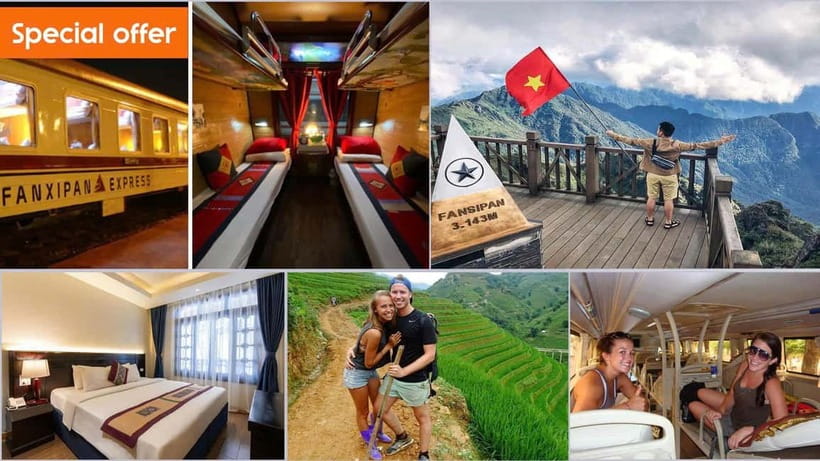
Your first evening starts with pickup at your Hanoi hotel or an assigned meeting point. You are taken to Hanoi Railway Station, where you board the overnight train to Lao Cai. The included accommodation is a soft-sleeper, air-conditioned cabin shared by four people.
This is not a polished hotel room on rails. Expect a practical overnight train with limited personal space and the normal movement and noise that come with rail travel. One of the biggest complaints about the trip concerns the train, not the Sapa activities. Sleeping can be difficult, so bring warm layers, earplugs if you use them, and water for the journey.
The train is still a useful part of the experience. You wake near Lao Cai instead of spending the morning in a vehicle, and the railway makes the northbound journey feel like part of the trip rather than a transfer you must endure.
Weather can affect the plan. On one occasion, heavy rain canceled the train, and the organizer arranged a sleeper bus plus a short train station visit instead. That shows the value of having a local company coordinating the transport, but it also reminds you that mountain weather can change plans.
The early transfer from Lao Cai to Sapa
A driver meets you at Lao Cai station between 5:00 and 5:30 in the morning. You then join a transfer bus for the uphill ride to Sapa. The timing is efficient, but it is also early, especially after a night on the train.
Once you reach Sapa, you can freshen up and eat breakfast at the hotel. This small detail matters. You are not expected to start a long village walk immediately after stepping off the train, and access to the hotel gives you a place to reset before the day begins.
Sapa’s mountain setting is the visual reason for the trip, but the first morning is more about local communities than grand viewpoints. The guide helps explain who lives in the area and gives context to the homes, clothing, farming, and village routines you see along the way.
Ma Tra and Ta Phin, a quieter morning route
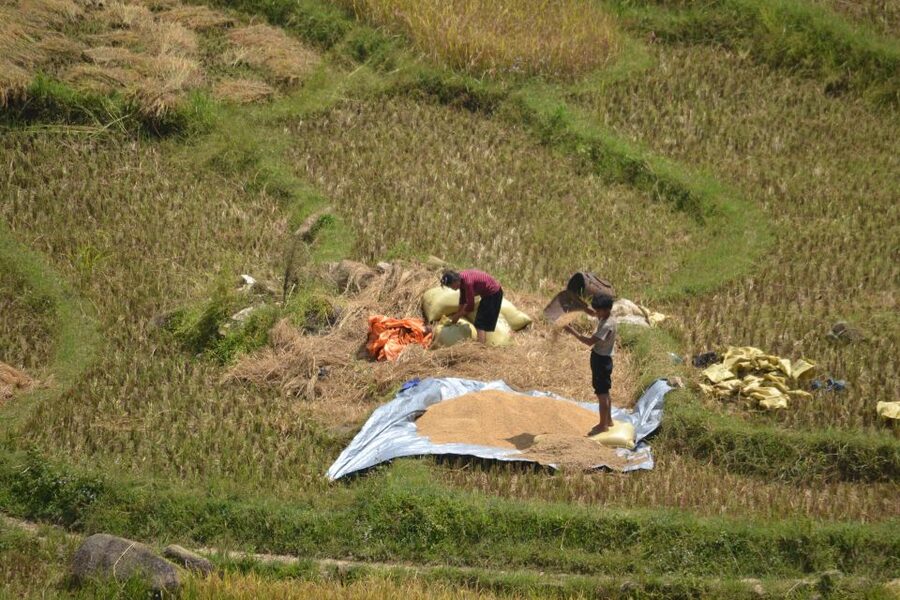
At about 8:00 or 8:30, you visit Ma Tra and Ta Phin. The route includes a short trek and introduces the Black H’Mong and Red Dao communities. These villages are a good choice if you want something less concentrated than the central Sapa streets.
The walk is shorter and gentler than the afternoon route, although the ground can still be uneven. The value here comes from the guide. Without local explanation, you might simply see mountain homes and people going about their day. With an English-speaking guide, you have a better chance of understanding the cultural differences between the two groups and the role of the villages in the area.
You return to Sapa for lunch. The schedule is sensible: a morning outing, a meal in town, and a break before the more demanding afternoon. If you are tired from the train, use lunch and the early afternoon to recover rather than treating every spare minute as sightseeing time.
The visit is not designed as a private, slow cultural exchange. It is a guided introduction during a compact group tour. You should be respectful, ask before photographing people, and avoid expecting a staged performance or a shopping stop to represent village life.
A few more limousine trips in Vietnam worth a look
- From Hanoi: 2-Day Sapa Trek Tour – Luxury Limousine Transfer
★ 4.1 · 249 reviews - From Hanoi: Sapa 3-Day Medium Trek and Limousine Trip
★ 4.5 · 59 reviews - From Hanoi: 3-Day Sapa Trekking with Limousine Transfer
★ 4.3 · 30 reviews - Sa Pa 2-Day Moderate Trek and Homestay Limousine Tour from Hanoi
★ 4.5 · 21 reviews
Choosing between Lao Chai to Ta Van and Cat Cat

At about 2:30 in the afternoon, the planned choice is between the long Lao Chai to Ta Van trek and a Cat Cat Village route with a waterfall. The Lao Chai to Ta Van option is the stronger match for anyone booking this as a trekking trip, but it is also where the physical demands increase sharply.
The route is about 10 kilometers and includes uphill and downhill sections. After rain, it can become very muddy and slippery. Falls have occurred on the wet track, so good footwear is not optional. Bring shoes with firm grip, clothing that can get dirty, and a light rain layer. You should also be honest about your balance, stamina, and comfort on steep ground.
This is an important point that the schedule does not make clear enough: the word trekking can sound gentle, but this route may feel like a serious hike. If the weather is poor, ask the guide about the condition of the path and whether the shorter Cat Cat option is wiser. You should not feel pressured to take the longer route simply because it appears to be the main choice.
Cat Cat gives you a different sort of afternoon, with village walking and a waterfall. The information provided does not give its exact distance or difficulty, so I would ask for a clear description before choosing it. If your main goal is a long rural walk, choose Lao Chai and Ta Van in dry conditions. If you prefer a shorter outing or the ground is slick, Cat Cat may be more sensible.
After the afternoon activity, you return to the hotel for a shower and dinner. That shower is especially welcome after a muddy route.
One night in central Sapa
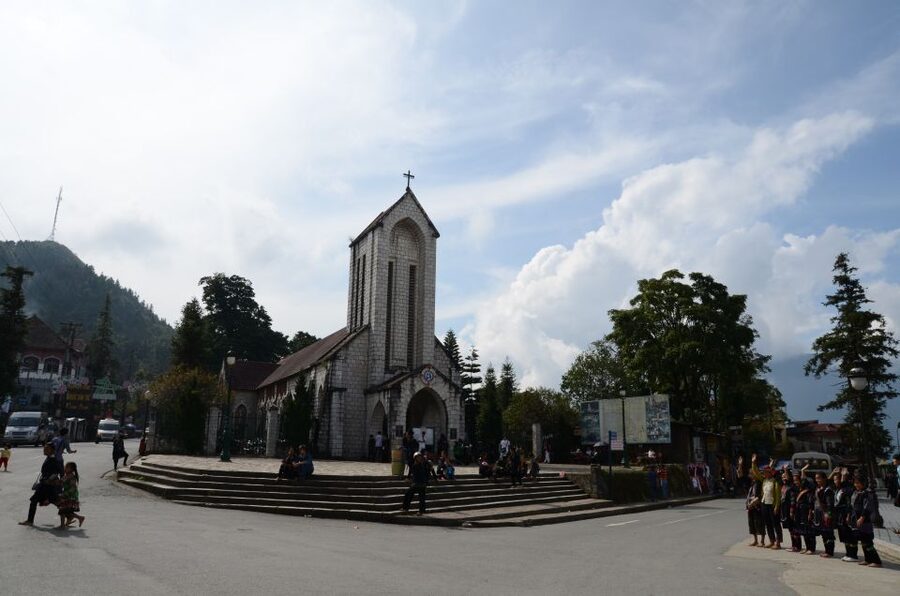
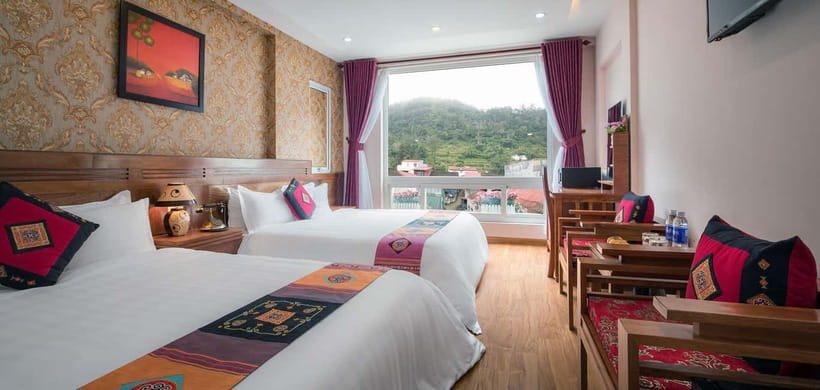
The included hotel is three-star and based on twin sharing. It is in central Sapa, which makes the evening simple. After dinner, you can walk around town without arranging another transfer, or you can turn in early after the overnight train and full day on foot.
The hotel is best viewed as a comfortable base rather than a major part of the holiday. You get a bed, breakfast, and a place to wash up, but the trip is not built around resort facilities. A single room costs an additional $20 per room per night, according to the booking terms.
The central location also helps on the second morning. You can walk to Sapa Church, visit the local market, or stop at the Sapa museum during your free time. The schedule leaves you room to choose your own pace instead of forcing another guided excursion.
A free morning, or the optional Fansipan cable car
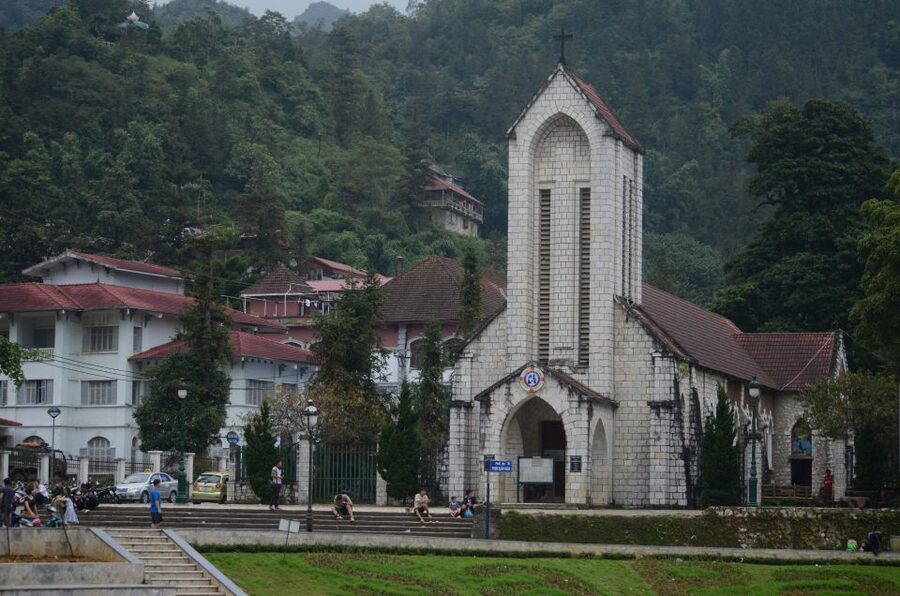
Breakfast is scheduled at about 7:30. After that, the morning is free until lunch and the afternoon departure. This is one of the better features of the program because Sapa is easier to enjoy when you have a little unscripted time.
You can keep things simple with the church, market, and museum. These stops are close to the center and suit anyone who wants to recover from the previous day’s trek. You can also use the morning for coffee, a town walk, or a slower look at daily life.
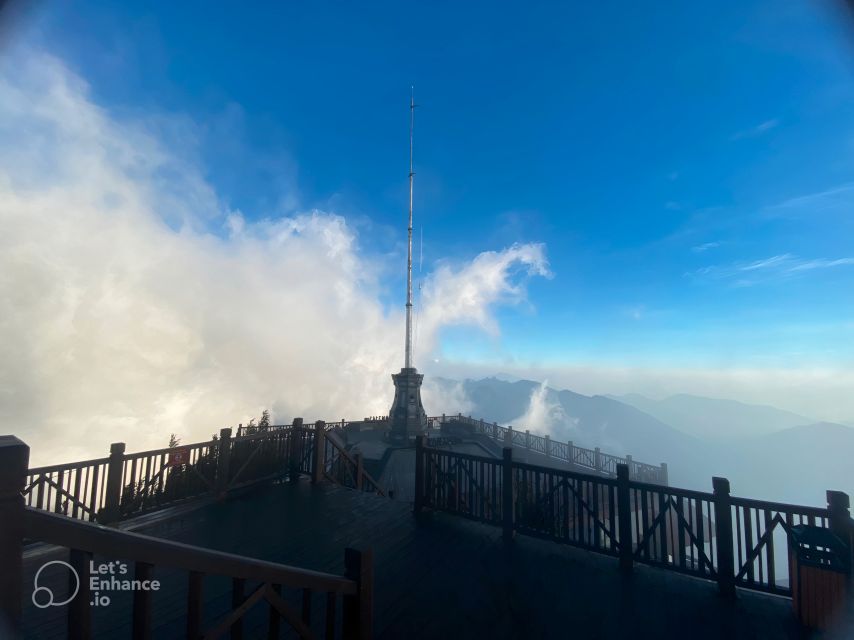
Fansipan is offered as an optional add-on. You pay $20 per person for the transfer and $36.50 per person for the return cable car ticket. That makes the total extra cost $56.50 per person. The cable car is not included, and you need to request the arrangement in advance.
Fansipan can be a good choice if reaching Vietnam’s high point matters more to you than a relaxed morning. It can also be a poor choice if you are already tired or if mountain weather limits the view. The free morning is valuable in its own right, so do not add the cable car simply because it is available.
Returning to Hanoi by limousine bus
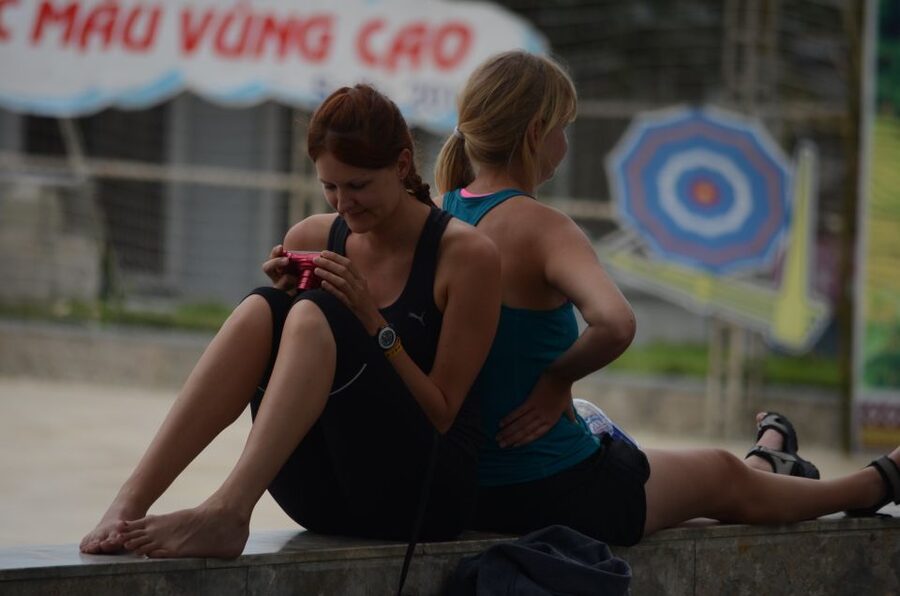
Between 1:30 and 2:00 in the afternoon, you board the limousine bus back to Hanoi. The vehicle is described as having 28 spacious seats, but the trip still takes much of the day. You reach Hanoi at about 8:30 in the evening and make your own way back to your hotel.
This return leg is less romantic than the night train, but it lets you travel during daylight and avoid another night without proper sleep. Some feedback describes the bus as having rest berths, while the official transport details describe a spacious limousine-style coach. Either way, you should expect a long road journey, not a short shuttle.
The final arrival time matters if you have a late flight or another booking that night. I would keep your evening flexible. You may be back around 8:30, but traffic can affect the exact arrival time.
What is included, and what costs extra

The $136 package covers:
- Hanoi hotel or meeting-point pickup to the railway station
- Soft-sleeper train in an air-conditioned four-person cabin
- Transfer from Lao Cai to Sapa
- Sapa transport during the activities
- One hotel night on a twin-sharing basis
- Meals named in the schedule
- English-speaking local guide
- Entrance fees for Ma Tra, Ta Phin, Lao Chai, and Ta Van
- Return limousine bus from Sapa to Hanoi
You pay separately for drinks, tips, personal expenses, a single room supplement, the Fansipan transfer and cable car, and anything not clearly listed. Holiday surcharges of 700,000 Vietnamese dong per person apply on the specified dates, including April 30, May 1, September 1 to 3, December 24 and 31, and January 1, 2026. That surcharge is paid directly to the guide.
The trip allows reserve-now, pay-later booking and full refunds for cancellations made at least 24 hours ahead. Those terms are useful if your Hanoi plans are still shifting.
Who should book this Sapa trip?
I would choose this tour if you want to see Sapa from Hanoi without arranging train tickets, local transfers, a hotel, a guide, and village entrances yourself. It suits you if you like an active schedule, want contact with Black H’Mong and Red Dao communities, and accept that overnight transport will be basic.
I would be cautious if you need reliable sleep, dislike shared cabins, or expect a gentle walk. The Lao Chai to Ta Van route can be genuinely tough in wet conditions. You should also reconsider the trip if you need a private room by default, since the standard hotel arrangement is twin sharing.
The strongest parts are the local organization, the efficient transport plan, the quieter Ma Tra and Ta Phin visit, and the chance to use your free morning as you wish. The weakest parts are train comfort, the long return bus ride, and the lack of a clear warning about how difficult the muddy trek can become.
Should you book it?
Book this Sapa trip if you want good coverage in a short time and are willing to trade comfort for convenience. At $136, the combination of transport, guide, hotel, meals, and entrance fees is reasonable.
Before paying, confirm the meeting point, the exact train service, the expected trek condition, and whether you can switch to the shorter route if rain makes the trail unsafe. Pack warm clothing from November through March, sturdy shoes for the villages, and patience for the overnight train. If you do that, this is a practical way to reach Sapa and experience more than the town center.
FAQ
How long is the Sapa experience?
The trip uses one overnight train from Hanoi to Lao Cai, two days in the Sapa area, one hotel night in Sapa, and a return limousine bus to Hanoi on the second afternoon.
What type of train accommodation is included?
The included train ticket is a soft sleeper in an air-conditioned cabin shared by four people.
Is the return transport to Hanoi included?
Yes. A limousine bus from Sapa to Hanoi is included, with arrival scheduled at about 8:30 in the evening.
What villages are included?
The morning visit includes Ma Tra and Ta Phin. The afternoon trekking option goes from Lao Chai to Ta Van.
How difficult is the Lao Chai to Ta Van trek?
It is a long trek of about 10 kilometers with uphill and downhill sections. The route can become muddy, slippery, and potentially dangerous after rain.
Is Fansipan included in the price?
No. The Fansipan option costs $20 per person for the transfer and $36.50 per person for the return cable car ticket.
What should I bring?
Bring warm clothing, especially from November through March. For the longer trek, sturdy footwear and clothing suitable for muddy conditions are also sensible.
More 2-Day Experiences in Vietnam
- From Hanoi: 2-Day Sapa Limo Bus Tour & Fansipan Peak Visit
★ 4.6 · 277 reviews - From Hanoi: 2-Day Overnight Sapa Tour by Luxury Van Limousine
★ 4.5 · 210 reviews - From Hanoi: 2D1N Ha Long Bay Deluxe Cruise with Bus Limousine
★ 5.0 · 185 reviews - From Hanoi: 2-Day Overnight Sapa Tour by Limousine
★ 4.2 · 114 reviews
More evening trips in Vietnam
- Ninh Binh Luxury Tour 2 Days 1 night by limousine See Hidden Gems
★ 5.0 · 48 reviews - 2 Days 1 Night Ban Gioc Waterfall Tour from Hanoi By Limousine
★ 4.5 · 35 reviews - 2 Days 1 night Sapa Tour from Hanoi by Limousine/Sleeper bus
★ 4.5 · 6 reviews - Stretch Limo Private Day & Night Custom Tours of Washington DC
★ 5.0 · 92 reviews
Just added in Vietnam
- Light Cruise – Luxury Halong Day Cruise ( Limousine – Expressway – Small Group)★ 5.0 · 2 reviews
- Morning limousine D-car 8-seat transfer to Hanoi depart from Sapa Town center★ 3.0 · 2 reviews
- Daily Limousine Bus: From Ninh Binh to Hanoi★ 3.5 · 2 reviews
- Da Nang – Hue: Daily Limousine Bus★ 4.5 · 7 reviews
- Ninh Binh 2D1N Excursion from Hanoi by Limousine★ 4.5 · 6 reviews
- BIG BOSS private LIMOUSINE DAY TRIP TO MEKONG DElTA★ 5.0 · 7 reviews
- Hoi An – Hue: Daily Limousine Bus★ 3.0 · 2 reviews
- Full Day Tour in Hanoi City by Limousine Bus★ 5.0 · 9 reviews
Limousine Bus Transfers, compared.
2-Day Sa Pa Ethnic Homestay Tour & Trek with Limousine Bus
Read our review →
Halong bay 5star Cruise Day Trip: Buffet lunch & Limousine bus
Read our review →
Halong Bay Day Tour 6Hour Deluxe Cruise Limousine Bus Small Group
Read our review →
Hanoi City Tour Full Day Small Group, Lunch, Limousine Bus
Read our review →
Halong Bay Luxury cruise Day trip: Buffet Lunch, Limousine bus
Read our review →
Luxury Hoa Lu Tam Coc Mua Cave 1 Day With Limousine Bus And Lunch
Read our review →
Halong bay Luxur Cruise Day trip: Buffet lunch & Limousine bus
Read our review →
Halong Bay Day Trip 6hour: Buffet Lunch,Limousine bus,small group
Read our review →Browse the lists this tour appears in